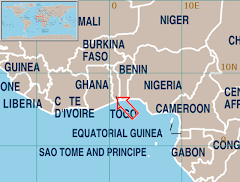
After the september presentation we have discussed different ways how to help PDH and the people of Togo further. We now have an organization called "Tales of Togo" and "Project Echelle", which is part of Tales of Togo, will raise funds to support different programs via PDH in Togo.
Early next year we will start the process of applying for a non-profit status in the USA.
As a start we have decided to be at two different Christmas Fairs in December. On Saturday December 6th we will have a stand at the Holiday Craft Fair at Rolling Ridge Retreat and Conference Center in North Andover. On Sunday December 7 we will be at the Alternative Christmas Fair in the Hancock Church in Lexington. At both Fairs we will sell illuminated glass blocks and picture perfect cards to generate funds. In addition our neighbors, Elif and Yonet, have teamed up with us to sell beautiful Ebru, or paper marble, an old Ottoman tradition stemming back from the 15th century. Ebru will be sold framed and as beautiful postcards.
All proceeds of the Fairs are going towards Project Echelle to support the projects via PDH.
We have also ordered handbags, placemats and napkins made by the people in Togo. The fabric is very vibrant and typical Togolese and I am very much looking forward to receiving the first shipment. Unfortunately it takes very long for it to arrive and I hope it will come in time for the Holiday Fairs.
Saturday, November 29, 2008

Wednesday, July 23, 2008
Presentation at Sunday September 7, 2008
On Sunday September 7, 2008 Saskia and I will give a powerpoint presentation about our experiences in Togo and an evite invitation will follow in August.
We can show you many pictures, tell you many stories and let you all know what happened with your donations of goods and money.
We hope you will be able to come for an afternoon of sharing drinks, food, photos and fun.
We can show you many pictures, tell you many stories and let you all know what happened with your donations of goods and money.
We hope you will be able to come for an afternoon of sharing drinks, food, photos and fun.
Pictures

School Children

Street Scene in Lome

Cooking Lunch

Pediatric Ward at the
University Hospital in Lome

Creative Time at PDH

Siblings coming for the childrens support group
Soccer Teams outfitted with the donated socces shirts

Classroom

Transportation in Togo
Friday, July 4, 2008
Last day
Here it is. Its arrival was imminent yet it still feels as though it snuck up on us, quickly: the last day.
During our stay at PDH we have laughed and cried, pulled out our hair in frustration over not being able to do more and our hearts just generally overflowed with emotion. We have learnt so much about Togo, its culture, its inhabitants and the hardships they face on a daily basis. For this we don't only want to thank the clients, we also want to thank the staff at PDH. Their patience, ingenuity and devotion are incredible and inspirational.
We have been able to see the enormous difference that PDH makes in people's lives here, sometimes solely by just providing a listening ear or a comforting hand on a shoulder. PDH helps people to smile again and their children's activities enable these kids, even if it is for only one afternoon per month, to be kids and just have fun.
The departure is a dreaded one. There is still so much work to do, so many cases still unresolved. As such we aim to continue working with PDH, albeit at a distance, perhaps returning one day. The work is incredibly important and we feel honoured that we have been able to play a small role in this. Thanks to everyone here, thank you to everyone who donated money and goods, they have had a huge impact. Even though this might be the end of a chapter, the book is far from written. Keep checking the site to see how the story unfolds.
Bisou!
Yoka and Saskia
During our stay at PDH we have laughed and cried, pulled out our hair in frustration over not being able to do more and our hearts just generally overflowed with emotion. We have learnt so much about Togo, its culture, its inhabitants and the hardships they face on a daily basis. For this we don't only want to thank the clients, we also want to thank the staff at PDH. Their patience, ingenuity and devotion are incredible and inspirational.
We have been able to see the enormous difference that PDH makes in people's lives here, sometimes solely by just providing a listening ear or a comforting hand on a shoulder. PDH helps people to smile again and their children's activities enable these kids, even if it is for only one afternoon per month, to be kids and just have fun.
The departure is a dreaded one. There is still so much work to do, so many cases still unresolved. As such we aim to continue working with PDH, albeit at a distance, perhaps returning one day. The work is incredibly important and we feel honoured that we have been able to play a small role in this. Thanks to everyone here, thank you to everyone who donated money and goods, they have had a huge impact. Even though this might be the end of a chapter, the book is far from written. Keep checking the site to see how the story unfolds.
Bisou!
Yoka and Saskia
Dirty lawyer
Some mornings I feel like a lawyer. Not one of those good ones, no, I feel like the dirty kind. The kind that knowingly defends the guilty guy. Yes. My guys, girls, men and women are guilty. I am just trying to prevent them from receiving the death sentence. Literally. They are guilty of unwillingly being stuck by crippling disease. Severe cases that require long term care, tests, medications. All of which come at a cost. The resources of PDH are limited; for the cost of one of ‘my’ cases they could easily help many others.
Voices in favour of not taking on such long term expensive cases are starting to emerge. People that say perhaps only medical tests should be paid for, not the long-term follow-up care. I play the devil’s advocate and say that medical tests are by definition intended to expose problems. Those problems need follow-up care to solve them. Well, those voices say, then perhaps not pay for any medical tests at all. That’s not a solution either, without knowing what is wrong no solutions can be found.
I continue my exposé, there is no point in starting something, getting so incredibly close to resolving problems and then pulling out at the last minute, as someone decides that enough money has been spent on an individual and the remainder is better spent on multiple less ill cases.
It is easy to understand however, that when the money runs out there is no longer a choice. Then aid turns into a sinking ship, spectacularly so, dragging innocent victims down to the dark recesses of the ocean, titanic style. As such I can also see the other side of the story; there is something to be said for helping many who are less ill instead of helping one who is violently ill.
Yet helping someone undergo surgery but then not pay for the post-operative drugs is not acceptable, not even when the problem is lack of money. Thankfully the people here agree. Yet financially we’re up against a brick wall and faced with an immense dilemma, morally, ethically. I end up compromising for the moment, settling for a visit to a neurosurgeon. Enquire about possible cheaper drug options.
The dirty lawyer? Perhaps, but I can’t let someone my sister’s age, 21, slip away because of something that can be treated. Here and now.
Voices in favour of not taking on such long term expensive cases are starting to emerge. People that say perhaps only medical tests should be paid for, not the long-term follow-up care. I play the devil’s advocate and say that medical tests are by definition intended to expose problems. Those problems need follow-up care to solve them. Well, those voices say, then perhaps not pay for any medical tests at all. That’s not a solution either, without knowing what is wrong no solutions can be found.
I continue my exposé, there is no point in starting something, getting so incredibly close to resolving problems and then pulling out at the last minute, as someone decides that enough money has been spent on an individual and the remainder is better spent on multiple less ill cases.
It is easy to understand however, that when the money runs out there is no longer a choice. Then aid turns into a sinking ship, spectacularly so, dragging innocent victims down to the dark recesses of the ocean, titanic style. As such I can also see the other side of the story; there is something to be said for helping many who are less ill instead of helping one who is violently ill.
Yet helping someone undergo surgery but then not pay for the post-operative drugs is not acceptable, not even when the problem is lack of money. Thankfully the people here agree. Yet financially we’re up against a brick wall and faced with an immense dilemma, morally, ethically. I end up compromising for the moment, settling for a visit to a neurosurgeon. Enquire about possible cheaper drug options.
The dirty lawyer? Perhaps, but I can’t let someone my sister’s age, 21, slip away because of something that can be treated. Here and now.
Wednesday, July 2, 2008
Les Soeurs de la Providence
Once a week, José from PDH, goes to the Soeurs de la Providence, a religious order from Italy in Lomé, to help with the administration. PDH has a collaboration with the nuns and one morning a week baby formula, rice and porridge is given to those who need it among many other things. The whole morning misery is walking by; the mothers who do not have the money to buy formula if they cannot breast feed their baby, the woman whose husband just passed away and left her behind with seven kids; the HIV positive mother with a very malnutritioned child, who is also suffering from malaria; the woman with a young baby who is crying since she is in an advanced stage of aids, the sick who cannot pay for their medicine. The baby with a cleft palate, who is fortunately going to Europe for surgery, paid for by Terre des Homme, but all the pre testing needs to be paid for in the local hospitals in Lomé. The list goes on and on and on; misery condensed in a four hour period. The sister is friendly to all, but harsh to some for a good reason, but when it comes to babies she is melting away completely. She is handing out the plastic bags filled with baby formula, rice and porridge , but she is also giving medicins to people who come with a prescription from a doctor and she gives shoes and clothes for the children. All medicins come from Italy as does most of everything else she gives to the woman and children. I have only seen one man coming in to ask for help, the others were all women and children; they are suffering the most. Everything from the formula to the medicins have been donated by friends of her. I have seen several women with twins; it seems that several of the very poor and malnutrioned people give birth to twins, I do not know whether there is any relation or this is just a matter of coincidence.
I recognise a few people, since they also come to PDH for help, those are in the most difficult of circumstances. Such as the family with nine kids, the twins of two months old are malnourished, they have a handicapped son of three years old who is very cute and always smiles, and a son who has had surgery and still needs lot of antibiotics, which is really expensive here. Without the antibiotics the surgery will not have the right outcome and he is will be back to square one. He might even die of his brain and nerve system infection. A daughter is sick with malaria at the moment. The husband cannot work because of an eye problem; this family is definitely desparate for help. We still had euros to donate and both PDH and us have decided that daughter Lawoe will be added to the education project; she will be given the opportunity to become a hairdresser and will be able to support her family after she finishes the program. They were so extremely pleased and grateful for this opportunity.
The university hospital is definitely not a place to be: some wards are so crowded that there is only a small space left between the beds, just enough for one person to stand there. There are no sheets for the beds, patients lay down a piece of plastic and spread some clothe above that and that is it. Some matresses are so worn down that the filling is coming out. When I was in the office of the head of the pediatric department, I saw a bed with a sheet with the name of the hospital on it, the way probably all beds have looked like in the past. Like in many African countries relatives care for their loved ones, bring food and everything else they need. Saskia has seen that they are even cleaning the floors.
All guide books mention that Togo did so much better in the distant past than they are doing now. According to a newspaper article people are now faring 7 times worse than they did 25 years ago. Togo was a prosperous country; it is hard to believe when you look around; it made good profits from the export of coffee, cocoa and phosphates. Than a group of friends around the president started with huge building projects, took out monster loans they never could be pay back etc. Corruption and fraud is the reason that this country is suffering; that many roads are dirt roads, the roofs of schools are leaking and will not be repaired, the health system is extremely bad and parts of the city are inundated during the rainy season and most of the time there is no electricity. Now 7 out of 10 people are considered poor and are suffering from malnutrion. As far as I can see only private initiatives can really help; the government here is doing absolutely nothing; it is scandalous. But private organisations like PDH and the Sisters can only do so much; there is never enough money to help everyone in need.
I recognise a few people, since they also come to PDH for help, those are in the most difficult of circumstances. Such as the family with nine kids, the twins of two months old are malnourished, they have a handicapped son of three years old who is very cute and always smiles, and a son who has had surgery and still needs lot of antibiotics, which is really expensive here. Without the antibiotics the surgery will not have the right outcome and he is will be back to square one. He might even die of his brain and nerve system infection. A daughter is sick with malaria at the moment. The husband cannot work because of an eye problem; this family is definitely desparate for help. We still had euros to donate and both PDH and us have decided that daughter Lawoe will be added to the education project; she will be given the opportunity to become a hairdresser and will be able to support her family after she finishes the program. They were so extremely pleased and grateful for this opportunity.
The university hospital is definitely not a place to be: some wards are so crowded that there is only a small space left between the beds, just enough for one person to stand there. There are no sheets for the beds, patients lay down a piece of plastic and spread some clothe above that and that is it. Some matresses are so worn down that the filling is coming out. When I was in the office of the head of the pediatric department, I saw a bed with a sheet with the name of the hospital on it, the way probably all beds have looked like in the past. Like in many African countries relatives care for their loved ones, bring food and everything else they need. Saskia has seen that they are even cleaning the floors.
All guide books mention that Togo did so much better in the distant past than they are doing now. According to a newspaper article people are now faring 7 times worse than they did 25 years ago. Togo was a prosperous country; it is hard to believe when you look around; it made good profits from the export of coffee, cocoa and phosphates. Than a group of friends around the president started with huge building projects, took out monster loans they never could be pay back etc. Corruption and fraud is the reason that this country is suffering; that many roads are dirt roads, the roofs of schools are leaking and will not be repaired, the health system is extremely bad and parts of the city are inundated during the rainy season and most of the time there is no electricity. Now 7 out of 10 people are considered poor and are suffering from malnutrion. As far as I can see only private initiatives can really help; the government here is doing absolutely nothing; it is scandalous. But private organisations like PDH and the Sisters can only do so much; there is never enough money to help everyone in need.
Sunday, June 29, 2008
Another side of Lomé
There is another side to life in Lomé as well. The French Cultural Center downtown organises on a regular base free concerts and other events which are open to everyone. We went to a concert with modern African music on Saturday night. Several groups were performing and the style of the music was very much based on the music of Bob Marley. I had never realised that he had so much influence in this part of the world. The music was good, but the dancing was incredible; those people know how to dance and move their bodies! The public consisted mainly of expatriates and other seemingly well off locals from the upperclass. They were very well dressed and that is something I had not seen before.
Wednesday, June 25, 2008
A bit of everything
Aids is making many victims here and it will for the quite some time in the future. Being diagnosed and living with HIV has an enormous stigma here; I have heard so often during the house visits that no one might know they are infected; it is a big secret. Sometimes even partners do not know, so they can easily infect others. In this culture it is not uncommon that men can have multiple wives, therefore the rate of infecting others is high. If family members know about some one being infected with HIV, that person runs the risk that he/she will be abandonded completely. Many families have fallen apart because ofHIV/Aids and especially the women and children are the victims. Education that will change the general opinion towards HIV and Aids will be a key to a solution, but that is definitely not an overnight solution. I strongly believe that education is a key to end poverty, a key to knowledge and knowledge is power. According to the doctor who visits the center weekly, there are some programs at school, but the subject is an extremely sensitive one and programs are not very well implemented. A lot of work needs to be done by mostly private organisations; since the government is not doing enough if anything at all.
On a lighter note; one of the clients of PDH, Olivier, who has had the opportunity to follow a vocational training, has now a very well running atelier, where he makes beautiful tailor made clothes for the whole family. Saskia and I went last week to have an outfit tailor made for us. First we selected a model from the two brochures they had and we went to a fabric stall to select pagne, traditional Togolese fabric. Saskia was able to buy the fabric right around the corner, but I selected only a color purple and the style of the fabric. You have to bring your own pagne to the atelier and that was something we had not done. A few days later Olivier came to the center and we had to go to the Grand Marché, the big market here, since he could not find the right color. So in a taxi we went and we selected my fabric for a Togolese style outfit. We are very curious to see the end result; it can be ready any day now....
Another client of PDH with HIV makes beautiful paintings, or at least that was what he did before his family fell apart because of his HIV diagnosis. He is very artistic and I have seen two paintings of him at the wall. We talked about his life and his love for painting during one of the visits and he asked me if I was interested in having him make a painting as a very special souvenir. After thinking it over, I decided to go ahead and have him make a painting of Saskia and Erica. I had taken several pictures with me; since many people here love to see family pictures . As a basis he uses a color picture where facial features are clear. Today during a follow-up visit I saw the work in progress, and also here I am very curious to see the end result. He was far more optimistic today as he was the last time I met him; he was now doing something he loved doing and he was earning money as well.
Since the internet connection is very slow, it is not possible to upload pictures. They will have to wait until we are back home.
On a lighter note; one of the clients of PDH, Olivier, who has had the opportunity to follow a vocational training, has now a very well running atelier, where he makes beautiful tailor made clothes for the whole family. Saskia and I went last week to have an outfit tailor made for us. First we selected a model from the two brochures they had and we went to a fabric stall to select pagne, traditional Togolese fabric. Saskia was able to buy the fabric right around the corner, but I selected only a color purple and the style of the fabric. You have to bring your own pagne to the atelier and that was something we had not done. A few days later Olivier came to the center and we had to go to the Grand Marché, the big market here, since he could not find the right color. So in a taxi we went and we selected my fabric for a Togolese style outfit. We are very curious to see the end result; it can be ready any day now....
Another client of PDH with HIV makes beautiful paintings, or at least that was what he did before his family fell apart because of his HIV diagnosis. He is very artistic and I have seen two paintings of him at the wall. We talked about his life and his love for painting during one of the visits and he asked me if I was interested in having him make a painting as a very special souvenir. After thinking it over, I decided to go ahead and have him make a painting of Saskia and Erica. I had taken several pictures with me; since many people here love to see family pictures . As a basis he uses a color picture where facial features are clear. Today during a follow-up visit I saw the work in progress, and also here I am very curious to see the end result. He was far more optimistic today as he was the last time I met him; he was now doing something he loved doing and he was earning money as well.
Since the internet connection is very slow, it is not possible to upload pictures. They will have to wait until we are back home.
Tuesday, June 24, 2008
Pluie et neige
There's nothing like waking up to rain. The torrential rain does to Togo what snow does to England. Everything grinds to a halt. Meetings don't happen, visits are postponed. So when someone walks through the gate into the centre you know something's up. This morning it was the mother of Dzigbodje. Her face revealed nothing about the reasons why she braved the rain. Dzigbodje is the woman whom I first met in hospital last week after she lost her child. She didn't eat for a week and had chronic diarrhoea. All too soon the reason became clear. She is dead. I wonder if she just gave up the fight, two dead children, a dead husband and no future, not in this country as a person with HIV. She was a year younger than me.
In the hospital last week I was happy to find out that Alexandre's doing well. After he passes his medical tests (paid for by PDH) he will hopefully be in the care of Terre des Hommes. They will send him to Europe (either France or Switzerland) to have the hole in his heart surgically fixed. As I stand outside the ward talking to his mother I suddenly notice two hands on my head, admiring my hair. Alexandre's grandmother just adores the straight blond locks that I occasionally wish I was without. Every time she sees me she touches my hair and says she'd like some too. The blond white young female thing does also attract lots of attention from the male folk here and I am starting a decent collection of phone numbers. I have also received 3 marriage proposals so far...none of which I have accepted.
During a torrential rain storm while at Koffi's house today we get 'stuck' there for 3 hours. I am relishing it as I watch a little slice of daily Togolese life unfold around me. The room quickly fills itself with the smell of firewood smoke as the rain quenches a cooking fire outside. Yet the cooking continues while some members of the family get drenched. Around me children fall asleep while others wake up. The older kids, who can't be any more than 7 or 8 take care of the babies and keep each other entertained. They offer me food but I politely decline, this family of 11 is severely impoverished. Only yesterday I brought them an aid parcel with rice, smoked fish, canned tomatoes and some cooking oil. Thankfully declining food is not something that is considered impolite here.
During my stay at Koffi's family someone asks me "This thing you call snow, what is it like?" I start by saying that it is cold, that it covers everything in a layer of white stuff, that it is soft, sticky, fun to play in and with. It doesn't appear to be a satisfactory answer, but how to explain it to someone who doesn't even have a fridge, let alone a freezer! I think about it for a bit while the rain pounds on the roof, it drips on me through a small hole. Suddenly I know. I realise that it is not the facts but the emotion that it evokes that is of interest. "Snow is very special. It is beautiful, quiet and tranquil."
Life in Togo has shown me many ugly sides: hardships and difficulties that we can scarcely comprehend or imagine. Yet today, during the rain, I also got to see the other side: family life, something highly prized and valued here. Tranquil? No. Beautiful? Yes.
Friday, June 20, 2008
The ladder
Our education plan has received a name: l’echelle; the ladder; symbolic for the students who have a chance to climb out of poverty. We have met all the lucky ones and they are very happy. The students have been chosen based on their school results, their attitude towards learning and their family situation.
Two girls and one boy can go to school next school year and tuition, school uniform and school supplies will be paid for with your donations.
Elysée is an 8 year old girl; both her parents have passed away from aids. She herself is HIV positive. She and her little brother are now being raised by their grandmother, who does not have any income.
The second girl is Dope; she is also 8 years old. Her father passed away and her family is very poor. Her mother tries to make some money by selling talc powder on the street.
Samuel is also 8 years old and his father has died of aids. He is the youngest of 9 children and his mother is a home maker.
We have given each student a symbolic package with school supplies and a book donated by you for the kids and they were all smiles. They hardly ever receive anything especially for them.
One girl and one boy will receive funds for a vocational training of three years to become a tailor. Djewuda is a 17 year old girl and she has already started her vocational training; she has passed the initial months very well, but her family is unable to pay for her training. Her father has died of aids and her HIV positive mother tries to make ends meet for the family of 8 children and herself. Gregoire is 19 and very smart. His father has also died of AIDS and his family is also very poor. He had started his training, but had to stop since there was no money to pay for an education. The money for the vocational students also includes nutritional aid. In addition for payment for the 3 year training, your money will help pay for a sewing machine, since they need one in order to start their own business after graduation.
Two girls and one boy can go to school next school year and tuition, school uniform and school supplies will be paid for with your donations.
Elysée is an 8 year old girl; both her parents have passed away from aids. She herself is HIV positive. She and her little brother are now being raised by their grandmother, who does not have any income.
The second girl is Dope; she is also 8 years old. Her father passed away and her family is very poor. Her mother tries to make some money by selling talc powder on the street.
Samuel is also 8 years old and his father has died of aids. He is the youngest of 9 children and his mother is a home maker.
We have given each student a symbolic package with school supplies and a book donated by you for the kids and they were all smiles. They hardly ever receive anything especially for them.
One girl and one boy will receive funds for a vocational training of three years to become a tailor. Djewuda is a 17 year old girl and she has already started her vocational training; she has passed the initial months very well, but her family is unable to pay for her training. Her father has died of aids and her HIV positive mother tries to make ends meet for the family of 8 children and herself. Gregoire is 19 and very smart. His father has also died of AIDS and his family is also very poor. He had started his training, but had to stop since there was no money to pay for an education. The money for the vocational students also includes nutritional aid. In addition for payment for the 3 year training, your money will help pay for a sewing machine, since they need one in order to start their own business after graduation.
Thursday, June 19, 2008
Just a single tear
Just when you think that the sun is going to appear, another nasty rain cloud shows up to drench everything, again. That’s how it is here at the moment, both with regards to the weather and the people that we’re trying to help. Days in the hospital are particularly difficult, it is not just the out of date facilities, it is also the fact that diseases are allowed to progress much further here before treatment is sought.
Little two month old Alexandre; he's back on oxygen. His parents were elated to hear on Monday that their son would be fine. Yesterday one of the local volunteers and I had to tell them that their son needs surgery. In Europe. The fear, frustration and devastation on their faces I will never forget. Just a little something their doctor omitted to tell them…as I stand on the ward I look over at the little girl next to him on the bed. She's tiny, has a pretty face. My gaze drifts to the venflon in her hand, I am shocked as I realise that her hand is the colour of my skin; white. I stare at her chest, is she breathing? I don't see anything and wonder if she's dead. Yet her mother is sitting there, protectively watching over her.
As I leave the ward a child comes running towards us from another building. She looks likes she belongs in a Discovery Channel program. Huge tumours on her face have completely morphed the structure of her face to the point where her eyes are at hugely different levels and her head is almost twice the size it should be. Only a very good craniofacial surgeon will be able to give her a chance at a normal life.
Walking to another ward I go past a waiting area. There are only two posters, located right next to each other: one by the Togo tourist board advertising Togo as the smile of Africa, the other by the World Health Organisation, illustrating the dangers of Noma (a gangrenous disease that leads to the destruction of facial tissue) with graphic pictures of children whose faces have almost completely disintegrated. Keep smiling. Then a body is wheeled past, covered only in a beautiful vibrantly coloured African cloth and a sheet of clear blue plastic. A foot pokes out of this ensemble, disturbing.
On the maternity ward I visit a woman with severe vomiting and diarrhoea, and a long list of other complaints. She can not stand on her own accord and looks frighteningly thin. She had her child a few days ago, 4 weeks premature. On Tuesday she told us that she wasn’t worried, her child was taller and heavier than some of the others. Tuesday night a call came in to tell us it had passed away. As I wonder whether this tiny baby was wrapped in beautiful cloth and clear plastic too, a tear glistens in the corner of her eye. It eventually trickles over the rim, to glide down the side of her face.
So much emotion, all contained in just a single quiet tear.
Little two month old Alexandre; he's back on oxygen. His parents were elated to hear on Monday that their son would be fine. Yesterday one of the local volunteers and I had to tell them that their son needs surgery. In Europe. The fear, frustration and devastation on their faces I will never forget. Just a little something their doctor omitted to tell them…as I stand on the ward I look over at the little girl next to him on the bed. She's tiny, has a pretty face. My gaze drifts to the venflon in her hand, I am shocked as I realise that her hand is the colour of my skin; white. I stare at her chest, is she breathing? I don't see anything and wonder if she's dead. Yet her mother is sitting there, protectively watching over her.
As I leave the ward a child comes running towards us from another building. She looks likes she belongs in a Discovery Channel program. Huge tumours on her face have completely morphed the structure of her face to the point where her eyes are at hugely different levels and her head is almost twice the size it should be. Only a very good craniofacial surgeon will be able to give her a chance at a normal life.
Walking to another ward I go past a waiting area. There are only two posters, located right next to each other: one by the Togo tourist board advertising Togo as the smile of Africa, the other by the World Health Organisation, illustrating the dangers of Noma (a gangrenous disease that leads to the destruction of facial tissue) with graphic pictures of children whose faces have almost completely disintegrated. Keep smiling. Then a body is wheeled past, covered only in a beautiful vibrantly coloured African cloth and a sheet of clear blue plastic. A foot pokes out of this ensemble, disturbing.
On the maternity ward I visit a woman with severe vomiting and diarrhoea, and a long list of other complaints. She can not stand on her own accord and looks frighteningly thin. She had her child a few days ago, 4 weeks premature. On Tuesday she told us that she wasn’t worried, her child was taller and heavier than some of the others. Tuesday night a call came in to tell us it had passed away. As I wonder whether this tiny baby was wrapped in beautiful cloth and clear plastic too, a tear glistens in the corner of her eye. It eventually trickles over the rim, to glide down the side of her face.
So much emotion, all contained in just a single quiet tear.
Tuesday, June 17, 2008
Updates
Just to update cases that we've discussed on the blog: first the happy news. Alexandre finally had his ultrasound done yesterday and as it turns out he will be fine! He has a small hole is his heart but it is expected to heal naturally. As it turns out his bad state last week could be blamed on bronchitis, worsened by his heart condition. Having said that, he is still tiny for a 2 month old, his mother is still ill and the family still has barely enough money to feed themselves.
I went to visit Koffi again this morning, his condition has worsened. He had a drain put in last Thursday, two small plastic tubes akwardly sticking out near the bridge of his nose, taped down with a large white plaster. I worry about infection. He is still on the same medications as before, but they don't seem to make a difference. He has lost consciousness 3 times in the last 24 hours alone. These episodes are characterised by shaking, jerky movements and screaming. I wonder why they can't figure out what is wrong with him. Tomorrow morning a team will be sent to the hospital to discuss his case with him and his doctor, hope I can join them. As I am leaving his house Koffi is clearly in pain, despair in his eyes. The joyous laughter of always happy baby brother Emmanuel doesn't even result in a hint of a smile. I note that the "dieu n'oublie personne" sign near their house has disappeared. Dispair? Disappointment? Defeat?
Sadness sweeps over me this afternoon. Koffi's situation that isn't resolving. Emmanuel's future, already tainted by the looming arrival of the need for anti-retrovirals, eventually AIDS. What will become of these children? What will become of the smiling happy little three year old I have come to know and love? Furthermore, it is not just them. They are providing faces to the grim statistics of Togo. The grim statistics of children in developing countries worldwide.
I went to visit Koffi again this morning, his condition has worsened. He had a drain put in last Thursday, two small plastic tubes akwardly sticking out near the bridge of his nose, taped down with a large white plaster. I worry about infection. He is still on the same medications as before, but they don't seem to make a difference. He has lost consciousness 3 times in the last 24 hours alone. These episodes are characterised by shaking, jerky movements and screaming. I wonder why they can't figure out what is wrong with him. Tomorrow morning a team will be sent to the hospital to discuss his case with him and his doctor, hope I can join them. As I am leaving his house Koffi is clearly in pain, despair in his eyes. The joyous laughter of always happy baby brother Emmanuel doesn't even result in a hint of a smile. I note that the "dieu n'oublie personne" sign near their house has disappeared. Dispair? Disappointment? Defeat?
Sadness sweeps over me this afternoon. Koffi's situation that isn't resolving. Emmanuel's future, already tainted by the looming arrival of the need for anti-retrovirals, eventually AIDS. What will become of these children? What will become of the smiling happy little three year old I have come to know and love? Furthermore, it is not just them. They are providing faces to the grim statistics of Togo. The grim statistics of children in developing countries worldwide.
Sunday, June 15, 2008
Voodoo
We were ready to escape the misery and the noise of the capital and we headed east to Lac du Togo and we stayed overnight in a bungalow at Auberge du Lac at the lake shore under the palm trees. Unfortunately it started pouring and we had thunder showers for hours. (The rainy season has begun). It became really cold and it was the very first time we have experienced cold temps and of course we had no sweater or anything since it has been hot all the time; even after showers. After a bottle of red wine from France and a good meal we enjoyed the night scenery and the tranquility of the place. This morning it was hot as usual and we went by piroque (a small wooden boat; a punter in Dutch) to the other side of the large lake to the little town of Togoville. A guide was waiting in town to show us around for a hefty fee. Togoville is the oldest town of Togo and animisme is still very much present; voodoo; catholisism and protestantism are going hand in hand there. The church built by the Germans has changed beliefs with the change of power and the windows show kings of Uganda instead of the disciples you would expect in those churches. Voodoo statues were all over town and people leave offerings for their gods in front of the sacred statues.
Taking a taxi back was a little more complicated but with the help of a family member of the owner of the Auberge we got one. The taxi was already full with people and you think it is a no go but they made space available. Four adults and one child in the back seat and Saskia and I on the front seat. The weekend was a good one!
Taking a taxi back was a little more complicated but with the help of a family member of the owner of the Auberge we got one. The taxi was already full with people and you think it is a no go but they made space available. Four adults and one child in the back seat and Saskia and I on the front seat. The weekend was a good one!
Friday, June 13, 2008
This is Africa
Last week I was in a small tailor's shop, I looked around and saw that the items they use there on a daily basis are things that I only knew from museums. Things that my great-grandmother used to have: a foot-pedal driven sewing machine and a iron that gets filled with hot coals. Life in Togo is like stepping back 30 maybe even as much as 50 years back in time, with odd additions of modern life as cyber cafes are rife and mobile phones jingle. Unfortunately life in hospitals in Togo is also antiquated.
Yesterday morning PDH was contacted by the extended family of a two month old boy called Alexandre. His family is in need of financial aid, the money has just simply run out. His mother is ill, one side of her face is severely swollen, she has been to doctors and tried various medications, all without success and now her two month old baby is ill. He has been in hospital for five days now, hooked up to oxygen. A venflon seemingly to big for his little hand, allows his IV to be hooked up occassionally to administer fluids. He is in obvious respiratory distress and the docs here suspect a congenital heart condition. He needs an ultrasound of his heart. For this to be done he needs to be transferred to a private clinic, something that was supposed to happen yesterday. It has been postponed without obvious reasons. Outside the ward his father vents some of his frustration to us, worry, fear and anger show on his face, but also despair and hopelessness. He is clinging to PDH, hoping that they can provide some help. This time though, just paying the bills might not be enough, things are beyond the scope and influence sphere of PDH. Alexandre's condition is deteriorating, without timely and adequate medical intervention I am uncertain that he will survive.
Frustration levels are running high. How can one of the largest hospitals in Togo, one associated with a university for that matter, be unable to administer an ultrasound? Why does this boy have to suffer from something, and possibly die from it, that could be fixed in the West? Why is it that a total hospital bill of less than $60 so far is insurmountable for his family?
The pediatric ward that Alexandre is on is very overcrowded. There are crying babies everywhere, families bringing food, sleeping in chairs by their children's cots, just trying to survive. From the corner of my eye I spy a little girl with a hydrocephalus. Her mother talks to Yoka, the girl has had surgery to put a drain in but she is not getting better. She is lethargic and very hot to the touch, possibly an infection, but the family is too poor to afford additional care. As I step outside the ward a man walks up to me, can I please come over to his friend's child and take a look at it. The child is not doing well and its eyes are starting to bulge out of their sockets he tells me. I decline politely, stating that I am not a physician and will be unable to help.
At the dinner table last night it is concluded that money talks, it buys healthcare, it buys education, it buys food to feed your children. Money is also what is distinctly lacking here, forcing people to choose between their own health and their children's, between health and food. But what good is it to have a healthy child without parents, or medication when you can't support your body nutritionally? There are just so many people here who need help that it sometimes appears an impossible task. However, our presence here has brought many smiles to the faces of children whose education we are sponsoring. A man with HIV I visited the other day clutched my hand as I was about to leave and thanked me for coming to see him, for taking an interest in the problems here.
It is good to step outside the comfortable Western bubble, into the harsh African reality, though at night I twist and turn as images of the day run through my head: children with HIV, children with curable diseases that die here, children with extreme dispair on their faces. This is Africa.
Yesterday morning PDH was contacted by the extended family of a two month old boy called Alexandre. His family is in need of financial aid, the money has just simply run out. His mother is ill, one side of her face is severely swollen, she has been to doctors and tried various medications, all without success and now her two month old baby is ill. He has been in hospital for five days now, hooked up to oxygen. A venflon seemingly to big for his little hand, allows his IV to be hooked up occassionally to administer fluids. He is in obvious respiratory distress and the docs here suspect a congenital heart condition. He needs an ultrasound of his heart. For this to be done he needs to be transferred to a private clinic, something that was supposed to happen yesterday. It has been postponed without obvious reasons. Outside the ward his father vents some of his frustration to us, worry, fear and anger show on his face, but also despair and hopelessness. He is clinging to PDH, hoping that they can provide some help. This time though, just paying the bills might not be enough, things are beyond the scope and influence sphere of PDH. Alexandre's condition is deteriorating, without timely and adequate medical intervention I am uncertain that he will survive.
Frustration levels are running high. How can one of the largest hospitals in Togo, one associated with a university for that matter, be unable to administer an ultrasound? Why does this boy have to suffer from something, and possibly die from it, that could be fixed in the West? Why is it that a total hospital bill of less than $60 so far is insurmountable for his family?
The pediatric ward that Alexandre is on is very overcrowded. There are crying babies everywhere, families bringing food, sleeping in chairs by their children's cots, just trying to survive. From the corner of my eye I spy a little girl with a hydrocephalus. Her mother talks to Yoka, the girl has had surgery to put a drain in but she is not getting better. She is lethargic and very hot to the touch, possibly an infection, but the family is too poor to afford additional care. As I step outside the ward a man walks up to me, can I please come over to his friend's child and take a look at it. The child is not doing well and its eyes are starting to bulge out of their sockets he tells me. I decline politely, stating that I am not a physician and will be unable to help.
At the dinner table last night it is concluded that money talks, it buys healthcare, it buys education, it buys food to feed your children. Money is also what is distinctly lacking here, forcing people to choose between their own health and their children's, between health and food. But what good is it to have a healthy child without parents, or medication when you can't support your body nutritionally? There are just so many people here who need help that it sometimes appears an impossible task. However, our presence here has brought many smiles to the faces of children whose education we are sponsoring. A man with HIV I visited the other day clutched my hand as I was about to leave and thanked me for coming to see him, for taking an interest in the problems here.
It is good to step outside the comfortable Western bubble, into the harsh African reality, though at night I twist and turn as images of the day run through my head: children with HIV, children with curable diseases that die here, children with extreme dispair on their faces. This is Africa.
Wednesday, June 11, 2008
On the back of a moto
On the back of a motorbike as we return from a visit I read a little sign`Dieu n'oublie personne', 'God doesn't forget people'. No, he doesn't. If he exists, he forgets whole families, whole countries, whole continents. And he might need to re-acqaint himself with the word 'justice', for there is none, something all the more apparent in these parts of the world.
I won't deny it as I am not a physician and therefore don't have to maintain a clinical detachment: there's a case that's getting to me. And yes, all cases do, they all have an intrinsic sadness about them, however, there is a family that has been dealt more than a fair share of misery.
Both parents have health problems, the mother is HIV positive and the father has an eye problem. They have 9 children. One of these children is also HIV positive. A three year old son, Emmanuel, who is the most adorable kid in Togo, has a severe hip deformation; both feet are rotated outward at 90 degrees from where they should be. He might have some other problems too but only time will tell. Then there are the two month old twins, Bernard and François. Adorable! Bernard is ill however, and doesn't appear to be doing well. It absolutely breaks your heart. Then there is 21 year old son Koffi. Koffi has a severe health problem that appears to be somewhat obscure and the docs don't really seem to understand. He has been hospitalised for two months, undergone multiple scans and has undergone surgery -racking up a bill so huge that his parents can't pay it. He is home now but when I went to visit I was told that he had been unconscious again this morning. All his current medications are adding to the horrible bill that his parents have. How much more misfortune can befall this family?
PDH have paid everything so far but with so much misery in one family it is hard to keep paying for everything, particularly since the resources here are so limited and there are so many people that need help. If this continues for too long, the staff here will have to make some very hard decisions. The amount for the total bill for Kofi that we're talking about? Less than $1000.
On the back of that motorbike, tears spilled from underneath my sunglasses.
I won't deny it as I am not a physician and therefore don't have to maintain a clinical detachment: there's a case that's getting to me. And yes, all cases do, they all have an intrinsic sadness about them, however, there is a family that has been dealt more than a fair share of misery.
Both parents have health problems, the mother is HIV positive and the father has an eye problem. They have 9 children. One of these children is also HIV positive. A three year old son, Emmanuel, who is the most adorable kid in Togo, has a severe hip deformation; both feet are rotated outward at 90 degrees from where they should be. He might have some other problems too but only time will tell. Then there are the two month old twins, Bernard and François. Adorable! Bernard is ill however, and doesn't appear to be doing well. It absolutely breaks your heart. Then there is 21 year old son Koffi. Koffi has a severe health problem that appears to be somewhat obscure and the docs don't really seem to understand. He has been hospitalised for two months, undergone multiple scans and has undergone surgery -racking up a bill so huge that his parents can't pay it. He is home now but when I went to visit I was told that he had been unconscious again this morning. All his current medications are adding to the horrible bill that his parents have. How much more misfortune can befall this family?
PDH have paid everything so far but with so much misery in one family it is hard to keep paying for everything, particularly since the resources here are so limited and there are so many people that need help. If this continues for too long, the staff here will have to make some very hard decisions. The amount for the total bill for Kofi that we're talking about? Less than $1000.
On the back of that motorbike, tears spilled from underneath my sunglasses.
Monday, June 9, 2008
Misery everywhere
There is so much misery in Togo; it is unbelievable!
I have visited several people at home and the stories I heard were of hardship. There was the women with HIV with all kind of physical problems and since she is very tired, she cannot work. Another women I saw was jobless as well. She used to sell used clothes and one day, after she sold the clothes she was robbed on her way home. Now she has no money to start all over again. Her husband has died of AIDS and she is HIV positive. She is afraid of having her two children tested, since she does not want to hear that her children might be infected too. Even her family does not know that she is HIV positive. She receives some money from her brother and maybe there is another aid agency which will give some support. Or the man who is working as a guardian at a school. He is there 24/7; and he is very tired and would like to have another job to support his 3 children. His wife divorced him when they found out about HIV. He used to make beuatiful paintings and he was showing a picture of the family in much better days. There was the mother with mental problems, who has been admitted to a hospital. Grandma is looking after the baby, but since they are very poor they cannot buy the right baby formula; so the baby of 10 months is malnourished. She was given a simple porridge which is lacking the essential nutrition for a tiny baby. She was softly whining and it breaks your heart. She was referred to the nuns, who give baby formula to the needy. Saskia was going to the nuns and she saw the baby there; the family has followed the advise of PDH, so hopefully this malnourished baby can get back to a healthy baby soon.
People are going around in circles and it is very difficult for them to get out of it. People with HIV are often without a job; sometimes the husband has passed away of AIDS, which makes the situation even more difficult. Many people are not telling family members that hey have been diagnosed with HIV; there is such a stigma, despite the big bill boards with the information that you do not get infected by meeting people. Sometimes the partner is leaving when a person is diagnosed with HIV. Many do not have enough money to buy food. They are living in very difficult circumstances in a tiny, often dirty room with often many people. Sometimes the partner is leaving when a person is diagnosed with HIV.
PDH offers a support group once a month, where many clients come too. They talk about all problems associated with HIV/AIDS and as an incentive they will receive a lunch. A group of women is cooking a lunch for 60 people. The lunch consisted of rice and chicken; I think the whole chicken went into the cookpot; only feathers were removed. Everyone received a bag with rice to take home. When they heard that our donation also bought bags of rice, we were thanked by many and actually I felt a little embarresed when that happend. The doctor also comes to the center on a weekly base to see patients and medicines are given to those who needs them. We have given some hair bands to the little girls with the typical african braids; all of a sudden there was a run on those: women wanted them for themselves and their children; men wanted them for their wives and children. They were gone in no time.
It is very difficult to understand how people make a living here. You see so many extremely small stalls where people are trying to sell their wares; peanuts, sweets, mangoes; linens, some soap, pots and pans etc. Basically you can buy everything you need on the street, but how can you make a living from selling a few bananas for $ 0,25 or a mango for $ 0,75 from from the mango tree in your own backyard???? Many clearly cannot. What we have not seen is people begging for food or money. Even in those difficult circumstances, people are smiling.
I have visited several people at home and the stories I heard were of hardship. There was the women with HIV with all kind of physical problems and since she is very tired, she cannot work. Another women I saw was jobless as well. She used to sell used clothes and one day, after she sold the clothes she was robbed on her way home. Now she has no money to start all over again. Her husband has died of AIDS and she is HIV positive. She is afraid of having her two children tested, since she does not want to hear that her children might be infected too. Even her family does not know that she is HIV positive. She receives some money from her brother and maybe there is another aid agency which will give some support. Or the man who is working as a guardian at a school. He is there 24/7; and he is very tired and would like to have another job to support his 3 children. His wife divorced him when they found out about HIV. He used to make beuatiful paintings and he was showing a picture of the family in much better days. There was the mother with mental problems, who has been admitted to a hospital. Grandma is looking after the baby, but since they are very poor they cannot buy the right baby formula; so the baby of 10 months is malnourished. She was given a simple porridge which is lacking the essential nutrition for a tiny baby. She was softly whining and it breaks your heart. She was referred to the nuns, who give baby formula to the needy. Saskia was going to the nuns and she saw the baby there; the family has followed the advise of PDH, so hopefully this malnourished baby can get back to a healthy baby soon.
People are going around in circles and it is very difficult for them to get out of it. People with HIV are often without a job; sometimes the husband has passed away of AIDS, which makes the situation even more difficult. Many people are not telling family members that hey have been diagnosed with HIV; there is such a stigma, despite the big bill boards with the information that you do not get infected by meeting people. Sometimes the partner is leaving when a person is diagnosed with HIV. Many do not have enough money to buy food. They are living in very difficult circumstances in a tiny, often dirty room with often many people. Sometimes the partner is leaving when a person is diagnosed with HIV.
PDH offers a support group once a month, where many clients come too. They talk about all problems associated with HIV/AIDS and as an incentive they will receive a lunch. A group of women is cooking a lunch for 60 people. The lunch consisted of rice and chicken; I think the whole chicken went into the cookpot; only feathers were removed. Everyone received a bag with rice to take home. When they heard that our donation also bought bags of rice, we were thanked by many and actually I felt a little embarresed when that happend. The doctor also comes to the center on a weekly base to see patients and medicines are given to those who needs them. We have given some hair bands to the little girls with the typical african braids; all of a sudden there was a run on those: women wanted them for themselves and their children; men wanted them for their wives and children. They were gone in no time.
It is very difficult to understand how people make a living here. You see so many extremely small stalls where people are trying to sell their wares; peanuts, sweets, mangoes; linens, some soap, pots and pans etc. Basically you can buy everything you need on the street, but how can you make a living from selling a few bananas for $ 0,25 or a mango for $ 0,75 from from the mango tree in your own backyard???? Many clearly cannot. What we have not seen is people begging for food or money. Even in those difficult circumstances, people are smiling.
Sunday, June 8, 2008
Daily life in Togo
It is very hot in Togo and the humidity level is very high. I am very happy that we have a tap in the bathroom for our bucket showers, since the cold water feels so good after a hot day. We have a modern closet, but we have to fill a bucket for flushing. We are 'bucketing' every day!
Not all people have water in their houses; they have to buy some water at water wells or water stations all over Lome; you see women carrying huge buckets with water on their heads.
Electricity is on most of the time, but it happens regularly that we loose power for a couple of hours, never in the morning or evening though, only in the afternoon so far.
In the morning we have a baguette with either peanut butter or butter and nescafe. Lunch and dinner consists of pasta, cous cous or yams and a sauce with some fish or meat and a few veggies. Avocados are sometimes part of the diet as well. At the little stalls on the street we buy mangoes and there are really good as are the pineapples.
Lome used to be a beautiful city and was called 'little Paris', but that was a long time ago. The standard of living has been going down since decades for political reasons and that is showing. Only a few main streets and the boulevard are paved, the rest is just sand. I feel that I am walking on the beach the whole time: wet sand after a thunder shower and loose sand at other times. We do our best to get the sand out of our beds! There are not many street lights, so after dark it is quite dark apart from some lights coming from a bar or another little business. There is also no regular waste collection in Lome, so people simply throw their household waste out in the streets.
There are two ways of transportation we have tried so far: by moto or scooter and a taxi.
The moto is the cheapest way and they are everywhere; you just hop on the back of a scooter and off you go. The scooter is also used by PDH to visit clients at home, school or hospital. The ride can be bumpy, since you ride on the sand almost all the time. The other way is by taxi; the cheapest taxis are the ones you share with many others, but you can also rent the taxi by the hour. That is what we have been doing with other volunteers, we combine shopping in a supermarket, getting cash out of the ATM at one of the few banks where you can get cash, or go to the Immigration Office. At one time the driver wanted a Togolese woman to leave the taxi so we could have that taxi, but fortunately we could prevent that from happening; that would have been so embarrassing.
People drive on all sides of the road; left, right and in the middle; it all depends on the condition of the road. Sometimes only a small area of the road can be used, especially after a heavy thunder shower, so everyone has to use that little path and it does not matter which direction you are coming from. For bad drivers they do very well!
Last thursday we had to bring our passport to the Immigration office and we had to go back the next day to pick it up. You only hope that they don't lose your passport, since the office seems a chaos and you do not get a receipt at all for leaving your passport at their office. Files are being hold together with big rubber bands randomly stored at shelves lining the walls. Friday afternoon our passport was ready and passports were grouped by country. We have to go back one more time to extend our visa.
Yesterday all international volunteers, together with Eloulou from PDH went on a day trip to Kpalime, a town a little over an hour drive from Lome and we did it the Togo way. At first we took a moto to go to the 'hub'; within 5 minutes we had 6 motos lined up to take us their and at the hub we hired a taxi: 4 people went in the back seat and 2 on the one front seat. The driver did fortunately not share seat. Kpalime is a nice town and the area is hilly. On Saturdays the big market is being held and it is very colorful: people are dressed in beautiful colored cloths and their wares are carefully grouped. That can be colorful too: huge bowls filled with chili peppers, avocados, legumes and loads of fish and flies. Unfortunately we cannot upload the pictures right now, due to the slow Internet connection.
Not all people have water in their houses; they have to buy some water at water wells or water stations all over Lome; you see women carrying huge buckets with water on their heads.
Electricity is on most of the time, but it happens regularly that we loose power for a couple of hours, never in the morning or evening though, only in the afternoon so far.
In the morning we have a baguette with either peanut butter or butter and nescafe. Lunch and dinner consists of pasta, cous cous or yams and a sauce with some fish or meat and a few veggies. Avocados are sometimes part of the diet as well. At the little stalls on the street we buy mangoes and there are really good as are the pineapples.
Lome used to be a beautiful city and was called 'little Paris', but that was a long time ago. The standard of living has been going down since decades for political reasons and that is showing. Only a few main streets and the boulevard are paved, the rest is just sand. I feel that I am walking on the beach the whole time: wet sand after a thunder shower and loose sand at other times. We do our best to get the sand out of our beds! There are not many street lights, so after dark it is quite dark apart from some lights coming from a bar or another little business. There is also no regular waste collection in Lome, so people simply throw their household waste out in the streets.
There are two ways of transportation we have tried so far: by moto or scooter and a taxi.
The moto is the cheapest way and they are everywhere; you just hop on the back of a scooter and off you go. The scooter is also used by PDH to visit clients at home, school or hospital. The ride can be bumpy, since you ride on the sand almost all the time. The other way is by taxi; the cheapest taxis are the ones you share with many others, but you can also rent the taxi by the hour. That is what we have been doing with other volunteers, we combine shopping in a supermarket, getting cash out of the ATM at one of the few banks where you can get cash, or go to the Immigration Office. At one time the driver wanted a Togolese woman to leave the taxi so we could have that taxi, but fortunately we could prevent that from happening; that would have been so embarrassing.
People drive on all sides of the road; left, right and in the middle; it all depends on the condition of the road. Sometimes only a small area of the road can be used, especially after a heavy thunder shower, so everyone has to use that little path and it does not matter which direction you are coming from. For bad drivers they do very well!
Last thursday we had to bring our passport to the Immigration office and we had to go back the next day to pick it up. You only hope that they don't lose your passport, since the office seems a chaos and you do not get a receipt at all for leaving your passport at their office. Files are being hold together with big rubber bands randomly stored at shelves lining the walls. Friday afternoon our passport was ready and passports were grouped by country. We have to go back one more time to extend our visa.
Yesterday all international volunteers, together with Eloulou from PDH went on a day trip to Kpalime, a town a little over an hour drive from Lome and we did it the Togo way. At first we took a moto to go to the 'hub'; within 5 minutes we had 6 motos lined up to take us their and at the hub we hired a taxi: 4 people went in the back seat and 2 on the one front seat. The driver did fortunately not share seat. Kpalime is a nice town and the area is hilly. On Saturdays the big market is being held and it is very colorful: people are dressed in beautiful colored cloths and their wares are carefully grouped. That can be colorful too: huge bowls filled with chili peppers, avocados, legumes and loads of fish and flies. Unfortunately we cannot upload the pictures right now, due to the slow Internet connection.
Wednesday, June 4, 2008
Scholarship
Antoine was extremely happy and overwhelmed with the huge amount. The next morning it was discussed with the whole team how to best use this money. After we had received more information about the costs for several options, we have choosen to give two students a full scholarship for a vocational training. This means that one boy and one girl can choose an education they want. The training lasts three years. Theory is minimal since all training will be done at the atelier or workshop. After each yeat they have to pass an exam and at the end they will have a final exam which gives them a diploma. they then can open a shop for themselves. We are promised that we will meet the lucky ones before we leave. The head master of the school will select the best students who are supported by PDH.
I have visited a few students, one is a woodworker in training and he makes beautiful wooded doors. A girl has chosen metal working and she will finish in 1 month. Currently she works at the construction site at PDH. Another man has finished his training to become a tailor and he is very successful; he not only has his own shop, but he also employs a few others. His outfits are really beautifully made.
The rest of the money will go to education for two girls and 1 boy, with everything they need for a full school year: tuition, school uniform and school suplies. In addition the money will go to nutritional aid for 15 adult clients, who need food with high nutritonal value. Almost all of them are infected with HIV or are extremely poor.
I have visited a few students, one is a woodworker in training and he makes beautiful wooded doors. A girl has chosen metal working and she will finish in 1 month. Currently she works at the construction site at PDH. Another man has finished his training to become a tailor and he is very successful; he not only has his own shop, but he also employs a few others. His outfits are really beautifully made.
The rest of the money will go to education for two girls and 1 boy, with everything they need for a full school year: tuition, school uniform and school suplies. In addition the money will go to nutritional aid for 15 adult clients, who need food with high nutritonal value. Almost all of them are infected with HIV or are extremely poor.
Tuesday, June 3, 2008
Someone forgot to tell us to bring an inflatable raft!!!
After the worst (read wettest and loudest) thunderstorm I have ever seen I have managed to make it to the cyber cafe! Thankfully it only started raining as we had returned to PDH headquarters, preventing the drenched 'yovo' (white person) look! June is the rainy season and we have been told to expect much more of this!
Life here is definately interesting, whether it is the morning meetings at which all of the cases of the day before get presented and possible actions that can be undertaken are discussed, or visiting the poorest of the poor at their houses (concrete structures), even just getting some mangoes from a local vendor and witnessing the activity on these busy red dirt streets is exciting!!!
On my first day of work I visited 4 women living with HIV, today I met with two children at their school. The third woman I met yesterday, Abide, sat me and the local volunteer Guillaume down on a bench in the shade of a mango tree. Although she has barely anything (her water supply, for drinking, eating and bathing is whatever she can collect during the rainy season from her roof) she insisted that we eat mango (very yummy!). She only manages to buy ARV (Anti Retro Virals) some months, a lot of the time she is too poor and instead spends her money on providing food for her children.
One of the other women I visited yesterday, Massan, is currently also infected with malaria, she was very withdrawn, quiet and sullen. Too poor to be able to visit a doctor for a prescription, she was advised to stop by the free clinic at PDH this Thursday. Until then symptom control is all that can be done, her daughter was sent to by paracetamol (tylenol in US speak) from a pharmacy.
Although life here is an adventure, it is a huge learning experience too. Although I have been in multiple developing countries all over the world I have almost never experienced poverty at this level. The confrontation with the inequalities in the world and this extreme poverty is sometimes quite difficult. In addition, it is hard to understand the interviews with patients (quite a difficult thing is the language barrier, even with perfect French it would have been hard as most of the people helped by PDH are very poor and uneducated, their primary language is the local Ewe). It is clear however that the presence of a yovo means something to these people; it breaks up the isolation that a lot of HIV infected people find themselves living in here and it makes them realise that they have not been forgotten by humanity.
Life here is definately interesting, whether it is the morning meetings at which all of the cases of the day before get presented and possible actions that can be undertaken are discussed, or visiting the poorest of the poor at their houses (concrete structures), even just getting some mangoes from a local vendor and witnessing the activity on these busy red dirt streets is exciting!!!
On my first day of work I visited 4 women living with HIV, today I met with two children at their school. The third woman I met yesterday, Abide, sat me and the local volunteer Guillaume down on a bench in the shade of a mango tree. Although she has barely anything (her water supply, for drinking, eating and bathing is whatever she can collect during the rainy season from her roof) she insisted that we eat mango (very yummy!). She only manages to buy ARV (Anti Retro Virals) some months, a lot of the time she is too poor and instead spends her money on providing food for her children.
One of the other women I visited yesterday, Massan, is currently also infected with malaria, she was very withdrawn, quiet and sullen. Too poor to be able to visit a doctor for a prescription, she was advised to stop by the free clinic at PDH this Thursday. Until then symptom control is all that can be done, her daughter was sent to by paracetamol (tylenol in US speak) from a pharmacy.
Although life here is an adventure, it is a huge learning experience too. Although I have been in multiple developing countries all over the world I have almost never experienced poverty at this level. The confrontation with the inequalities in the world and this extreme poverty is sometimes quite difficult. In addition, it is hard to understand the interviews with patients (quite a difficult thing is the language barrier, even with perfect French it would have been hard as most of the people helped by PDH are very poor and uneducated, their primary language is the local Ewe). It is clear however that the presence of a yovo means something to these people; it breaks up the isolation that a lot of HIV infected people find themselves living in here and it makes them realise that they have not been forgotten by humanity.
Monday, June 2, 2008
Border Crossing
Crossing the border from Ghana to Togo yesterday was an experience in itself! It was chaotic and time consuming and we never have seen anything like it.
Most cars do not cross the border, but stop at the border and people walk. We were picked up from Accra and during the drive to the border we were cramped in a car with 5 people and our 4 heavy bags. The representative from PDH asked us for euros so she could exchange some money at the black market, since all banks are closed on Sundays and paying in Togolese Franks speed up the visa process! Arriving at the border 4 Ghanese women came to lift our bags on their heads!!!!!! Our bags had received a sticker with 'heavy' at Heathrow airport and it was quite something to see your bags crossing the border on the heads of women. In a row we started walking and going to the custom office of Ghana. Of course we had to pay the women for their services, and I was looking for the right amount inside the office, when a custom officer noticed that and needed some money too. After filling out the custom forms and receiving stamps in our passport, we continued to the exit. It turned out that Saskia had to go back, since they did not stamp her passport the right way. Finally we came to the Togo border and a whole new process started, which took also a lot of time. Many stamps, stickers, numbers and signatures allowed us finally entry into Togo and by crossing the border we were in Lome as well. A taxi was waiting to transport us to the center, where we were greeted by Antoine, the director, his wife Rachel and little daughter. We are staying at the center together with two other volunteers, Steve from Ireland and Justin from the USA. Saskia and I share a room at the center with a bucket style 'shower' and a lot of space in the room. We each have a table with a chair and a big fan, which we definitely need here. Rachel is preparing meals for all of us. After a very late lunch we unpacked some of the luggage and all volunteers ended up in the bar just around the corner of PDH.
Later more about first impressions, donations and first day of work!
Most cars do not cross the border, but stop at the border and people walk. We were picked up from Accra and during the drive to the border we were cramped in a car with 5 people and our 4 heavy bags. The representative from PDH asked us for euros so she could exchange some money at the black market, since all banks are closed on Sundays and paying in Togolese Franks speed up the visa process! Arriving at the border 4 Ghanese women came to lift our bags on their heads!!!!!! Our bags had received a sticker with 'heavy' at Heathrow airport and it was quite something to see your bags crossing the border on the heads of women. In a row we started walking and going to the custom office of Ghana. Of course we had to pay the women for their services, and I was looking for the right amount inside the office, when a custom officer noticed that and needed some money too. After filling out the custom forms and receiving stamps in our passport, we continued to the exit. It turned out that Saskia had to go back, since they did not stamp her passport the right way. Finally we came to the Togo border and a whole new process started, which took also a lot of time. Many stamps, stickers, numbers and signatures allowed us finally entry into Togo and by crossing the border we were in Lome as well. A taxi was waiting to transport us to the center, where we were greeted by Antoine, the director, his wife Rachel and little daughter. We are staying at the center together with two other volunteers, Steve from Ireland and Justin from the USA. Saskia and I share a room at the center with a bucket style 'shower' and a lot of space in the room. We each have a table with a chair and a big fan, which we definitely need here. Rachel is preparing meals for all of us. After a very late lunch we unpacked some of the luggage and all volunteers ended up in the bar just around the corner of PDH.
Later more about first impressions, donations and first day of work!
Wednesday, May 28, 2008
Ready to go
Almost midnight and three large bags are packed with mostly donated materials for PDH.
We have raised a grand total of $2635, that is unbelievable!
Thank you all so much for the money and the goods.
I am ready to go......
We have raised a grand total of $2635, that is unbelievable!
Thank you all so much for the money and the goods.
I am ready to go......
Saturday, May 24, 2008
Less than a week to departure!
Think it’s time for me to write something for the blog! Having picked up my visa this week, the imminent departure finally feels more like a reality. Having been snowed under at work and removed from all the fund raising (I did raise a little!) Togo really seemed distant. Now it’s drawing closer! In a way it has been good, with barely enough time to even read the books Yoka sent me I have not had time to conjure up notions of what it might be like. This leaves me open minded, something all previous volunteers have recommended. Less than a week now until we leave and the excitement is growing rapidly, with that however is some slight hesitation. Some trepidation about the unknown, about being faced with situations that I have never encountered, my biggest fear being that I might be powerless and unable to make a difference. I don’t want to change the world, I just want to make a difference for one person. If that's all that I accomplish during this trip, then that will be enough.
Wednesday, May 21, 2008
Donations
More donations have been given for Togo: $2385 has been raised so far! I also have received goods which I will take to Africa: school supplies and toys from many friends, Cray-pas from Candace, to organize a creative workshop with the kids from, hair bands for girls and used precription glasses, donated by Nancy Roberge, from Chestnut Hill Physical Therapy Ass. in Wellesley. I am planning to give a class about dental care and we can give each child a tooth brush, tooth paste and floss, donated by my dentist, Dr. Thomas Puschak in Lexington. Kim from Pearl Vision in Burlington has donated a large bag of used glasses. CVS has donated first aid materials for PDH, which will be welcomed by the doctors who come to the centre to provide free consultations for patients. Via Passback Program, a joint effort between the U.S. Soccer Foundation, Eurosport and Major League Soccer I have received soccer shirts, soccer balls and shinguards in several sizes to outfit two teams. Soccer is the national sport in Togo and the kids will be thrilled. http://www.passback.org/.
Thank you all very much!
Thank you all very much!
Sunday, May 18, 2008
Fundraising BBQ Saturday May 17, 2008
 The sun came out after heavy rains the night before and the weather was just fine. Our neighbors did a fantastic job with setting up the front yard for the BBQ and helping with preparing food. Just before 4.30 pm the event started with an interview for the Littleton Independent. Around 30 people came this afternoon to enjoy the BBQ, good drinks and good company. It is so heart warming to see the support and outreach from all of you for a tiny non-profit organization in Togo.
We all enjoyed it very much that several members of the Halalisa singers were performing beautiful African songs from their repertoire.
I am extremely thrilled to let you know that we have raised a little over $2100 and € 35!
For PDH this means that so many more people can be given the needed medicines for malaria, TB and aids, so many more people can be given the high nutritional food they need and for so many more children their yearly school fees of $10 can be paid. This is super and I thank you all very much for your donations, time and effort. We will personally hand over all the money to the director of the center, Antoine Dzakas.


Thursday, May 15, 2008
Bienvenue
Welcome to our blog about our volunteer experience in Togo!
We could have choosen many different projects to volunteer for, but we have choosen Togo and the small non-profit organization PDH. We had the impression that our help was the most needed there.
Togo is one of the poorest countries in the world and some of the statistics about Togo are sobering: over a million children are underweight (out of over 6 million people); the average life expectancy is only 54 years. Only 4 out of 10 girls and 6 out of 10 boys can read and write. HIV/Aids, Malaria and TB are making many victims and leave thousands of children orphaned.The non-profit organization, PDH has an open-door and non-discriminatory philosophy that strives to help anyone in need, regardless of their status or condition. That means that all sorts of people come to their centre: those suffering from HIV/AIDS or other illnesses, the unemployed, orphans, children in need and victims of abuse or family problems.PHD humanitarian efforts focus on HIV/AIDS prevention; education for children in need; and basic services like medical care, food, clothing and shelter for children and adults who are suffering from extreme poverty and abandonment.Very often PDH is forced to turn away people that they, quite simply, cannot help.
We could have choosen many different projects to volunteer for, but we have choosen Togo and the small non-profit organization PDH. We had the impression that our help was the most needed there.
Togo is one of the poorest countries in the world and some of the statistics about Togo are sobering: over a million children are underweight (out of over 6 million people); the average life expectancy is only 54 years. Only 4 out of 10 girls and 6 out of 10 boys can read and write. HIV/Aids, Malaria and TB are making many victims and leave thousands of children orphaned.The non-profit organization, PDH has an open-door and non-discriminatory philosophy that strives to help anyone in need, regardless of their status or condition. That means that all sorts of people come to their centre: those suffering from HIV/AIDS or other illnesses, the unemployed, orphans, children in need and victims of abuse or family problems.PHD humanitarian efforts focus on HIV/AIDS prevention; education for children in need; and basic services like medical care, food, clothing and shelter for children and adults who are suffering from extreme poverty and abandonment.Very often PDH is forced to turn away people that they, quite simply, cannot help.
Subscribe to:
Comments (Atom)